

From Experience to Policy
OVTI began with a simple observation: migration policy is often discussed from completely different perspectives.
Lawyers examine the legal framework. Governments focus on implementation and return. Municipalities experience the local consequences. Employers face labour shortages. Migrants experience the system personally.
Yet these perspectives do not always meet.
Having experienced the Dutch integration process personally and later worked with refugees and migrants, Saeed Almaruffy became increasingly interested in the space between legislation and its practical consequences. That experience eventually developed into a broader question:
«Can we design migration policies that remain legally rigorous while responding more effectively to realities that existing systems struggle to resolve?»
OVTI was created to explore that question.
Background
Saeed Almaruffy has lived in the Netherlands since 2017 and later became a Dutch citizen.
His experience of rebuilding his life in the Netherlands gave him first-hand insight into the practical realities of migration, integration, language acquisition and participation.
Rather than allowing that experience alone to define his perspective, he became increasingly interested in understanding the legal framework behind the system. This led him toward formal study of Dutch migration law and a broader interest in European migration and integration policy.
Experience with Refugees & Migration
From 2017 to 2021, Saeed Almaruffy volunteered with VluchtelingenWerk Nederland (VWN). During this period, he worked closely with refugees navigating the practical realities of establishing their lives in the Netherlands.
The experience provided insight into the gap that can sometimes exist between legislation, administrative procedures and the everyday realities experienced by individuals and families.
It also reinforced an important principle behind OVTI: Effective policy must work not only on paper, but also in practice.
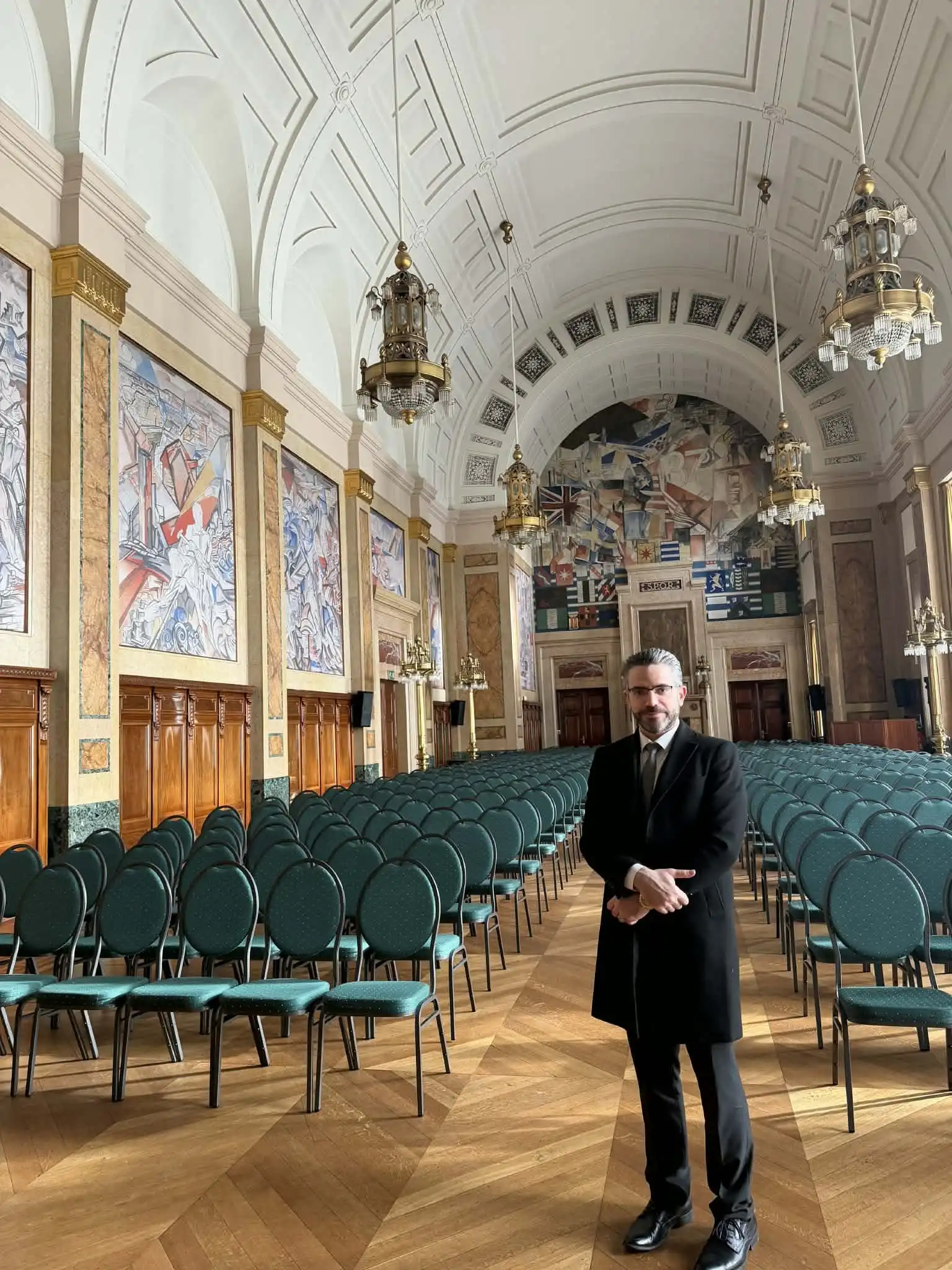
Developing a Deeper Understanding of Migration Law
Saeed Almaruffy has pursued legal education with a particular focus on Dutch migration law (vreemdelingenrecht).
Legal Education
His studies have covered areas including asylum procedures, residence law, family migration, return, administrative remedies and the relationship between Dutch and European migration frameworks.
This legal education complements his practical experience and forms part of the foundation from which OVTI's policy questions are developed.
OVTI's substantive legal publications are intended to rely on authoritative legislation, case law, institutional sources and specialist research rather than personal experience alone.
Why Policy?
Working with individual situations can reveal recurring problems. But recurring problems sometimes require more than individual solutions. They require policy questions.
The shift in perspective:
“How can this individual situation be resolved?”
“Why does this situation repeatedly arise, and is there a better policy mechanism for addressing it?”
That shift from individual cases toward structural policy thinking became one of the foundations of OVTI.
The Idea Behind the Bridge Permit
The Bridge Permit concept emerged from observing an apparent contradiction within European migration policy.
Some individuals receive final negative asylum decisions and are legally expected to leave, yet effective return may remain unrealised for prolonged periods. At the same time, European economies continue to experience labour shortages and governments seek stronger integration, participation and self-reliance.
Rather than assuming that either reality automatically provides the answer, Saeed Almaruffy began exploring whether a carefully regulated transitional mechanism could connect them. That question became OVTI's first major policy initiative.
Explore the ProposalThe Bridge Permit Framework
Connecting unresolved migration status with labour market realities through a regulated, conditional framework.
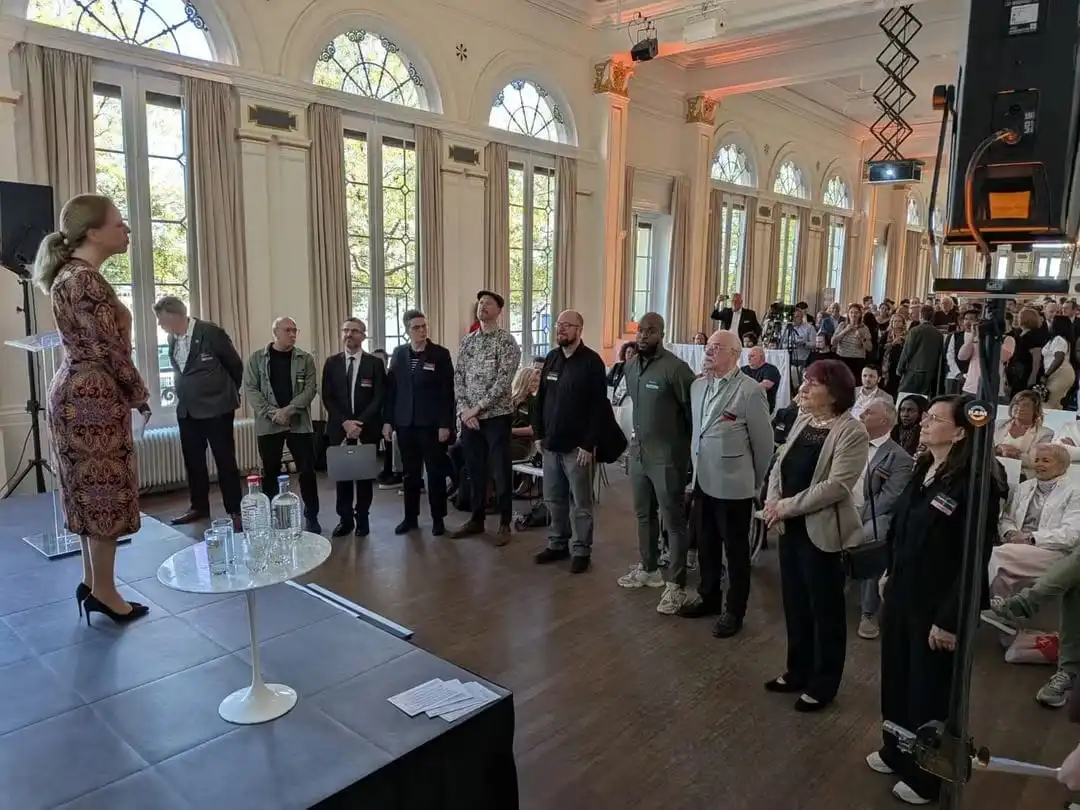
A European Perspective
Saeed Almaruffy's own journey has crossed different countries, cultures and legal systems. Today, his perspective is fundamentally European.
He believes effective migration policy should protect the integrity of asylum and return systems while remaining capable of adapting when prolonged realities expose gaps in existing frameworks. This requires balancing principles that are sometimes presented as opposites:
OVTI was established to explore where those interests can meet.
The Vision for OVTI
The Bridge Permit Framework is intended to be the beginning rather than the endpoint.
The long-term vision is for OVTI to develop into an independent European platform where legal research, practical experience and policy innovation come together. Future work may examine additional questions involving:
- Migration and integration
- European migration law
- Labour-market participation
- Legal certainty
- Return policy
- Residence pathways
- Public administration
- Social participation
- Legislative innovation
OVTI should ultimately be judged not by who founded it, but by the quality, transparency and practicality of the ideas it produces.